
Multi-Cloud Strategy
Practical AWS, Azure, and GCP architecture designed around your workloads, budget, and growth.
Cloud infrastructure built for where you're growing, not just where you are.
StackPrime provides end-to-end cloud computing services — from first strategy conversation through architecture, migration, automation, and ongoing administration — across AWS, Microsoft Azure, and Google Cloud Platform. Whether you're moving your first workload to the cloud or already running multi-cloud and need it managed properly, engagements are scoped to your actual environment rather than a fixed package.
Infrastructure is built as code wherever practical — Terraform for provisioning, Ansible for configuration management — so environments are repeatable, auditable, and don't rely on tribal knowledge of what was clicked in a console. CI/CD pipelines connect that infrastructure to how your team actually ships software, so deployment is a routine process, not an event.
Security, identity and access management, and cost control are treated as part of the architecture from day one, not an afterthought bolted on after launch. Whether you're running fully in the cloud, split across providers, or connecting cloud to infrastructure you still run on-premise, the goal is the same: a cloud environment you understand, can afford, and can maintain.
Explore some of the core solutions StackPrime delivers across this service area.
Practical AWS, Azure, and GCP architecture designed around your workloads, budget, and growth.
Modernize infrastructure, migrate workloads, and build scalable cloud environments with less operational friction.

Protect cloud environments with strong identity, access control, monitoring, and security configuration.
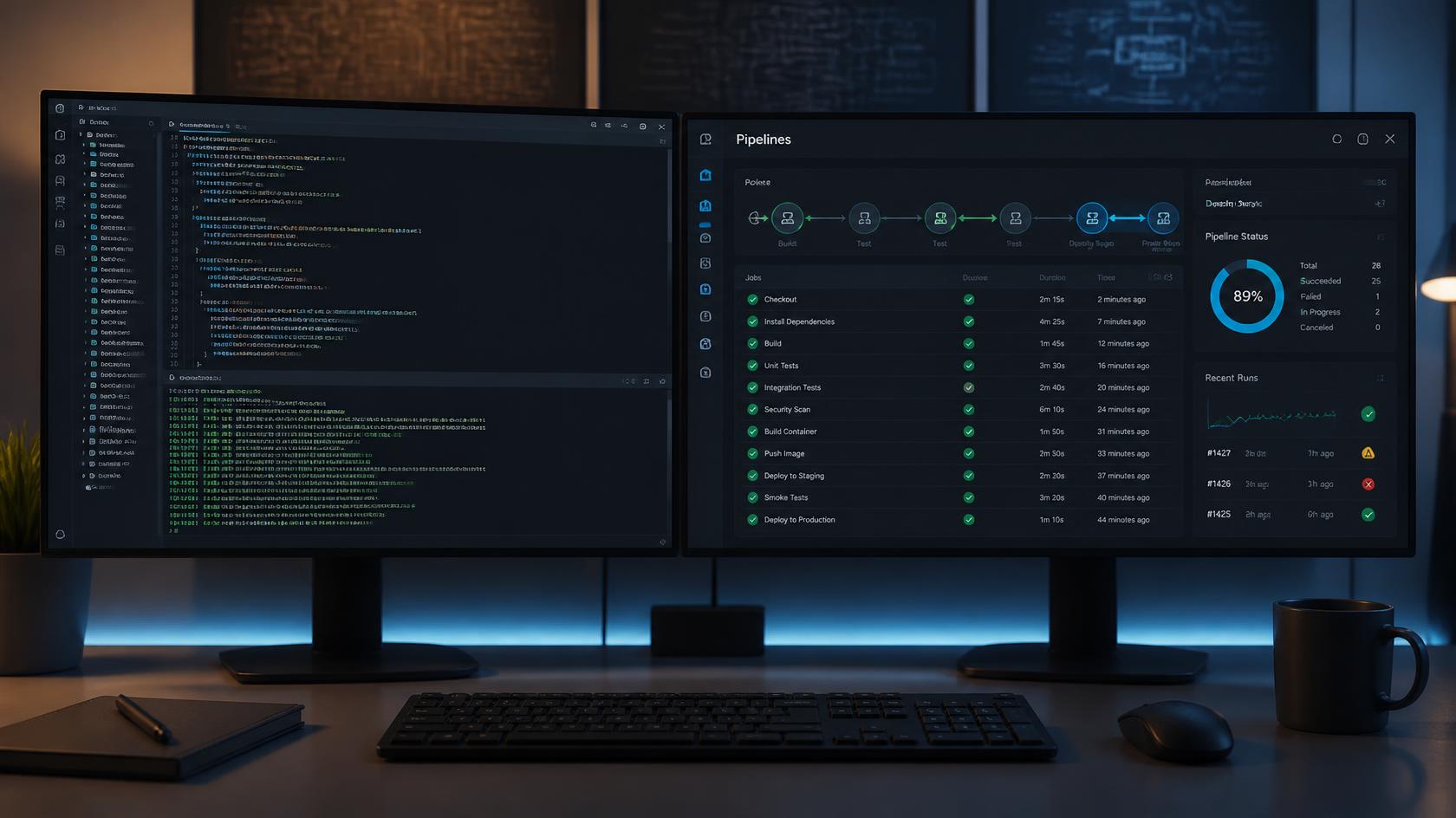
Terraform, Ansible, and CI/CD automation for repeatable, auditable, and maintainable infrastructure.
Assessing your current environment and mapping a cloud roadmap suited to your goals, budget, and risk tolerance.
Designing and deploying AWS environments — EC2, VPC, IAM, S3, RDS — sized to what your workload actually needs.
Azure resource groups, virtual networks, and compute and storage services deployed and configured for production use.
GCP project setup, compute and networking configuration, and architecture guidance for workloads on Google Cloud.
Moving on-premise or legacy systems to the cloud, re-architecting where it makes sense rather than a straight lift-and-shift.
Virtual network design, subnetting, peering, and routing across your cloud environments.
IAM roles, policies, and least-privilege access control across cloud accounts and services.
Security group and policy configuration, with ongoing monitoring for misconfigurations and emerging threats.
Provisioning and configuring virtual machines sized and secured for your actual workloads.
Object, block, and file storage configured with backup and retention policies that match your recovery needs.
Architecture that keeps services running through failures, with recovery plans tested, not assumed.
Infrastructure defined, versioned, and provisioned as code, so environments are repeatable and auditable.
Automated, consistent server configuration across your fleet using Ansible playbooks.
Automated build, test, and deployment pipelines that get code to production reliably.
Rightsizing resources, reserved capacity planning, and eliminating waste in your cloud bill.
Visibility into performance and health, with alerts that reach you before small issues become outages.
Deploying and hosting applications on cloud infrastructure built around the way they actually run.
Architecture connecting on-premise systems with cloud environments where a full migration isn't the goal.
Policies and controls that keep cloud usage aligned with your compliance and governance requirements.
Hands-on training so your team can operate and maintain the cloud environment with confidence.
We review your current infrastructure, workloads, and goals to understand what the cloud environment actually needs to do.
A clear architecture and migration or build plan, covering provider choice, cost, security, and timeline.
Infrastructure provisioned as code, networking and security configured, and workloads deployed or migrated.
Monitoring and alerting verified, documentation handed over, and your team walked through how it all works.
A scoping call is the first step — no commitment required.